What QDMA actually means
QDMA stands for the Quality Deer Management Association, the group that turned a scattered set of biology-driven practices into a philosophy hunters could actually run on their own ground. The organization is now the National Deer Association, but the shorthand stuck: when an outfitter says a property is QDMA-managed, they are claiming the deer herd is managed as a herd, not harvested as a crop.
The core idea is simple. In an unmanaged area, most bucks are killed at 1.5 or 2.5 years old, before they have grown into the deer they were capable of becoming, and the doe population runs well past what the habitat can feed. Quality deer management fixes both ends of that problem at once: protect young bucks, harvest enough does, and improve the food and cover that carry the herd through winter. Do it consistently and the age structure shifts, body weights climb, the rut tightens up, and hunters start seeing deer they used to only find on someone else's wall.
"My mission is to build and manage hunting properties with QDMA management practices."Neil Kendall, Frenzy Outdoors
The four cornerstones
Quality deer management rests on four legs. Skip one and the whole thing wobbles, great food plots cannot fix an over-harvested buck herd, and perfect trigger discipline cannot fix a property with nothing to eat in January.
Herd management
Keeping deer numbers in line with what the land can actually feed. Too many mouths on too few acres means underweight does, late fawn drops, and bucks that never build antler mass. We use trail-camera surveys, harvest data, and browse checks each summer to set a doe harvest target before opening day.
Habitat management
Deer eat at ground level, so we manage for what grows in the first six feet. Timber stand improvement, hinge cuts, prescribed edge feathering, and native browse release open the canopy so sunlight reaches the forest floor. Food plots then fill the seasonal gaps that native forage cannot cover.
Hunter management
The hardest part of QDMA is the trigger finger. We pass 1.5 and 2.5 year-old bucks, set a clear harvest standard for every camp, and keep hunter density low so pressure stays low. A buck that survives to 4.5 gains 25 to 30 inches of antler over what he carried at 2.5.
Herd monitoring
Management without measurement is guesswork. We log jawbone ages, live and dressed weights, antler measurements, lactation rates, and camera survey ratios every season. Those numbers tell us whether to shoot more does, plant more acres, or leave a property alone entirely.
Age structure: the whole ballgame
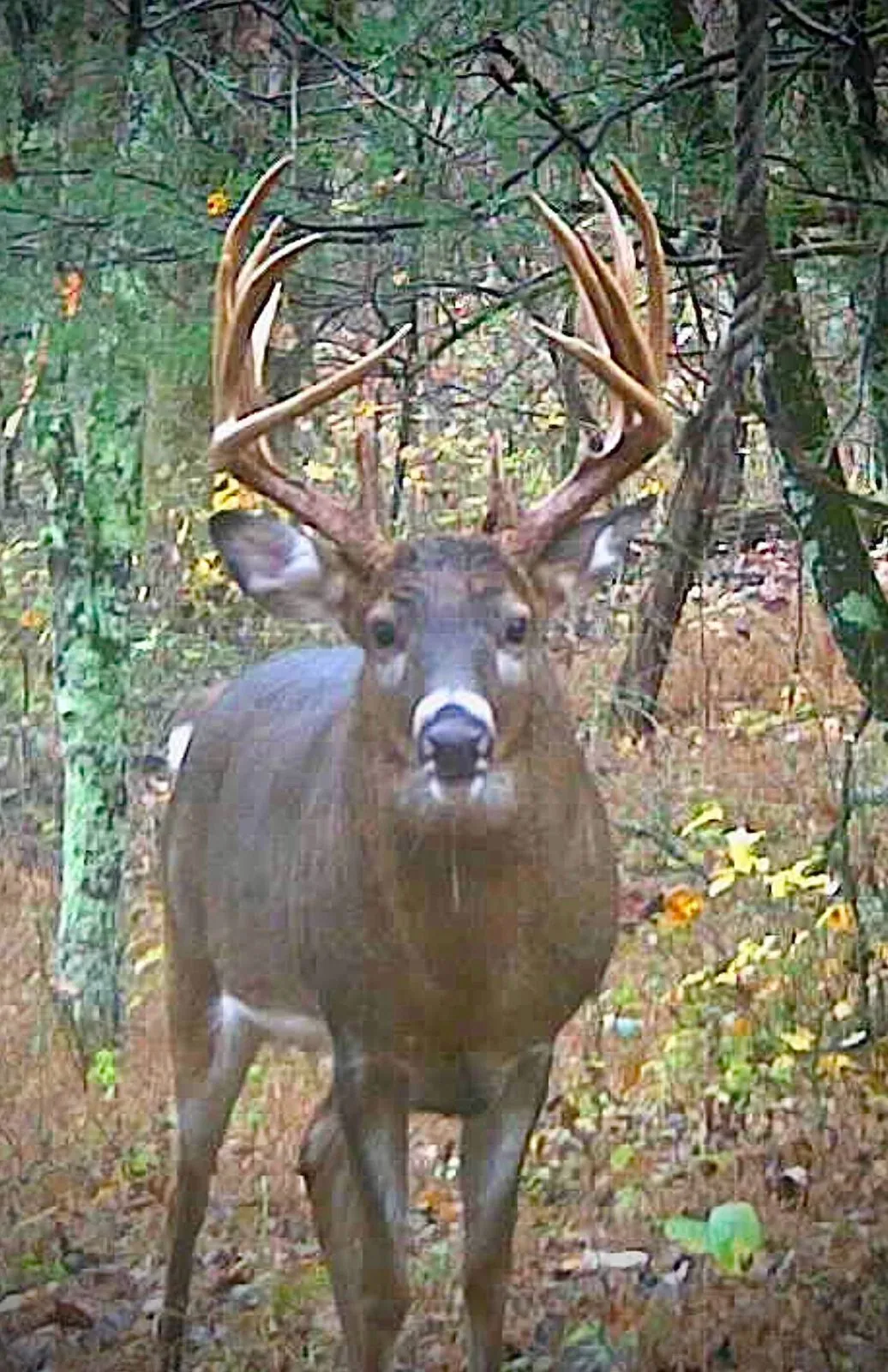
Antler size is genetics, nutrition, and age, and age is the only one a hunter controls with certainty. A buck carries roughly half his potential at 2.5 and about 90% of it at 4.5. Our "5K" buck is the clearest proof: he was already a good deer, and one more year of protection turned him into the animal on this page.
Judging age on the hoof beats counting points every time. Look at the body first, chest depth, belly line, neck, and the length of the face, then decide.
| Age class | Body cues | Antler potential | Our call |
|---|---|---|---|
| 1.5 years | Thin neck, legs look long | About 25 to 30% of potential | Always pass |
| 2.5 years | Athletic, waist still trim | About 45 to 55% of potential | Always pass |
| 3.5 years | Heavier chest, muscled neck in rut | About 70 to 75% of potential | Pass on most properties |
| 4.5 years | Deep chest, belly sags, blocky | About 90% of potential | Shooter |
| 5.5+ years | Pot belly, swayed back, short face | Full potential | Target buck |
Food plots and native forage
Habitat work in the timber
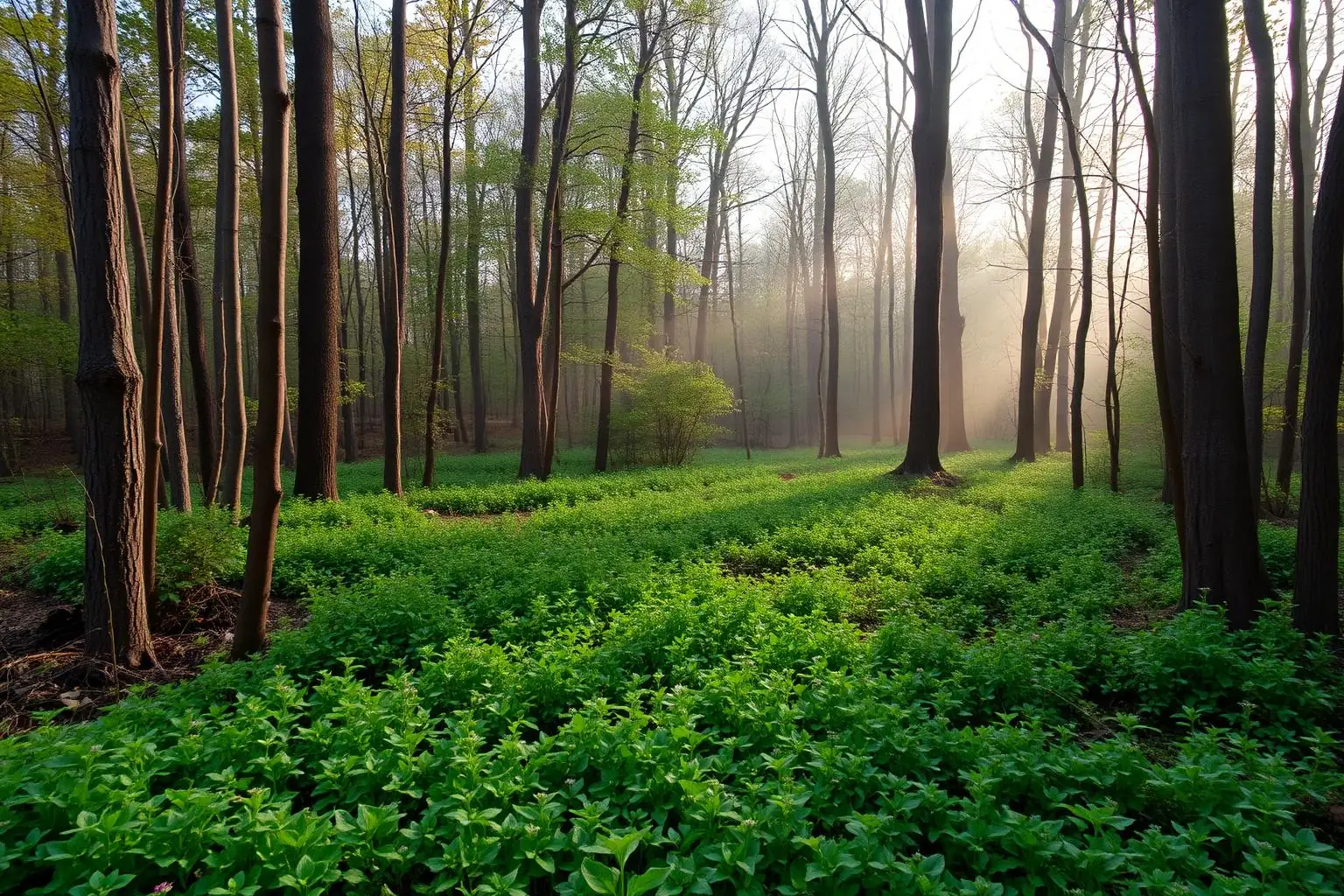
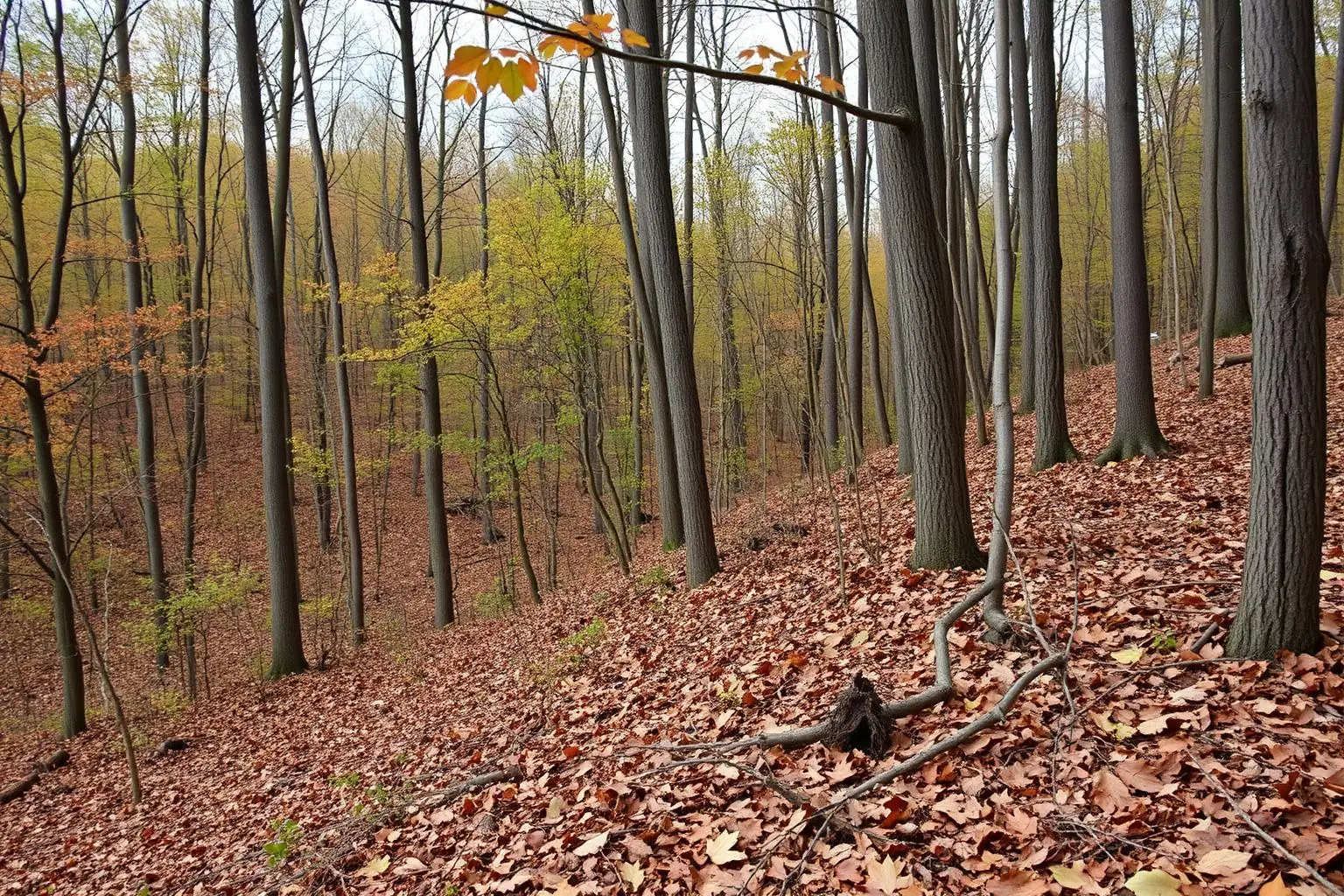
A mature closed-canopy woodlot looks beautiful and feeds almost nothing. Sunlight never reaches the ground, so there is no browse and no bedding cover. Timber stand improvement fixes that: we hinge-cut and girdle low-value trees, release oaks so they can put on mast, and feather field edges into a thick, brushy transition.
Within one growing season those openings explode with greenbrier, blackberry, and young sprouts, food and cover in the same place, exactly where a mature buck is willing to spend daylight. We also leave large blocks as sanctuary: no stands, no scouting during season, no exceptions. Pressure is the single fastest way to make an old deer nocturnal, and sanctuaries are how we keep him on the property.
Our management year
Quality deer management is a twelve-month job. Here is roughly how ours runs.
March to April
Frost seed clover, soil test every plot, lime where pH is under 6.2.
May to June
Plant summer beans and cowpeas for protein during antler growth and fawn rearing.
July to August
Timber stand improvement, mow and spray plot edges, run the camera survey.
September
Plant brassicas, cereal rye, and winter wheat for late-season energy.
October to January
Hunt with the wind, rotate stands, keep access routes cold.
February
Post-season shed hunting, harvest data review, set next year's plan.
Counting deer, not guessing
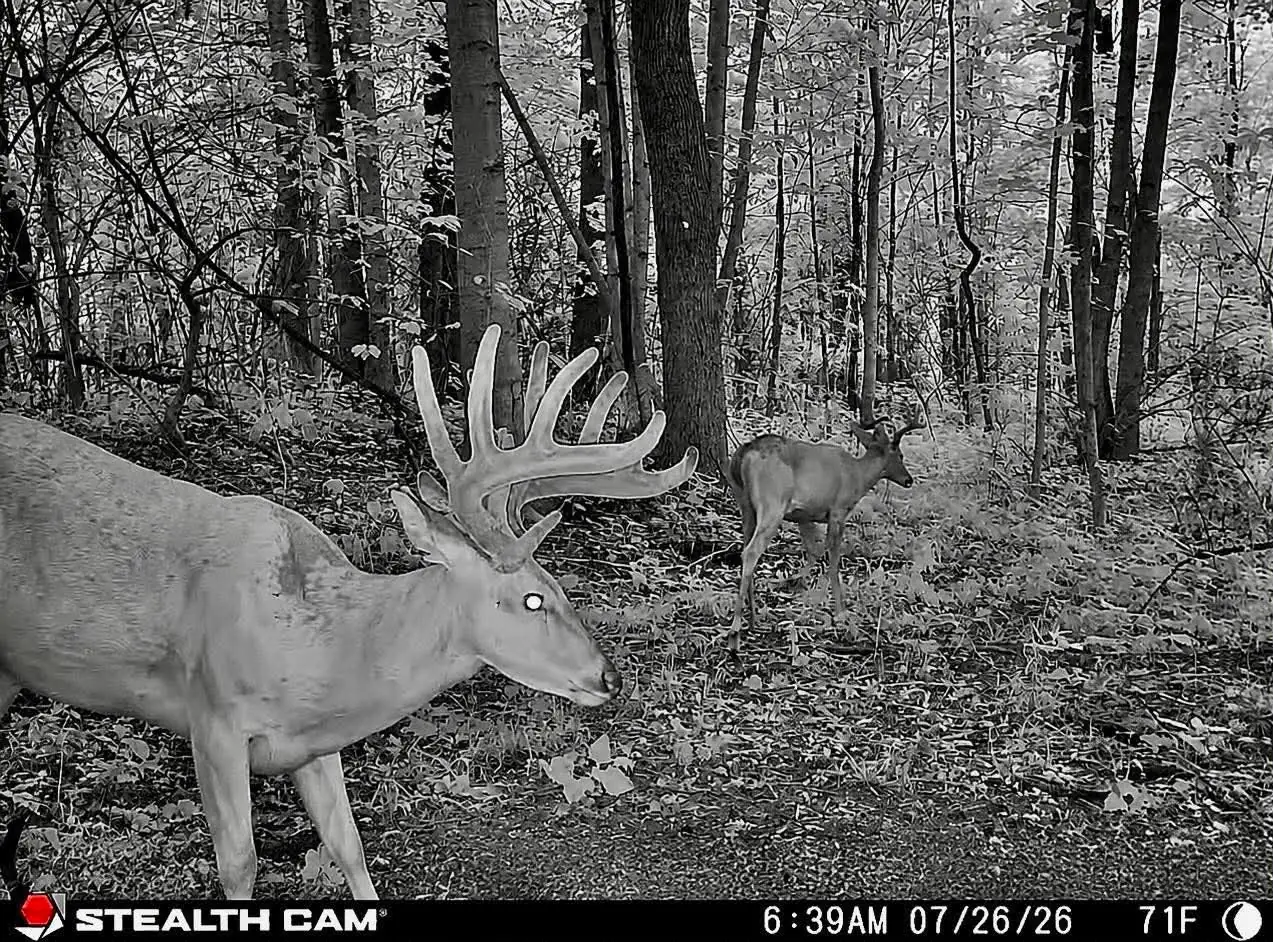
Every August we run a camera survey over bait or mineral sites, one camera per 80 to 100 acres for two weeks. Counting unique bucks against doe and fawn photos gives us a population estimate, a buck-to-doe ratio, a fawn recruitment rate, and a roster of the bucks we will hunt in October.
At the skinning shed we take a jawbone, a dressed weight, and antler measurements from every deer. Compared year over year, those numbers show whether the herd is improving or the habitat is falling behind, and they set the doe harvest target for the following season.
Common questions about QDMA
- What does QDMA stand for?
- QDMA is the Quality Deer Management Association, founded in 1988 and now operating as the National Deer Association. Hunters use "QDMA" as shorthand for quality deer management: managing the herd, the habitat, and the hunters together so deer reach a natural age structure.
- Is QDMA the same as trophy hunting?
- No. Trophy hunting is about what one hunter takes home. Quality deer management is about the health of the whole herd, balanced sex ratios, healthy does, and productive habitat. Mature bucks are the byproduct of doing the rest correctly.
- How many acres do you need for quality deer management?
- You can improve habitat on any acreage, but age structure moves fastest when you control enough contiguous ground that bucks spend most of their range on managed land. We manage roughly 5,000 private acres, which is why bucks here reach 4.5 and older.
- Why do you shoot does on a managed property?
- A doe-heavy herd browses the habitat down, spreads the rut out, and makes competition among bucks weaker. Removing the right number of does each year improves body weights, tightens the rut, and produces better hunting for everyone in camp.
- How long before QDMA shows results?
- Habitat work shows up the first growing season. Age structure takes three to five years, because a buck you pass today is not a 4.5 year-old until several seasons from now. Frenzy Outdoors has been managing this ground for decades, so hunters see the results immediately.
Hunt managed ground this season
See the mature-buck difference for yourself. Reserve your week with a 10% deposit, or call Neil at +1 859-979-2036 to talk through which hunt fits how you hunt.